
6 min read · Updated March 10, 2026
Every spring, Hudson Valley homeowners begin noticing mysterious winged insects around windows, doors, basements and other areas of their homes. Sometimes they're flying ants. Sometimes they're termite swarmers — and knowing the difference matters.
Eastern subterranean termites are the primary termite concern in New York. For most of the year, termite activity can remain largely hidden in soil, wood and protected areas of a structure. Swarm season is different.
Mature colonies periodically produce winged reproductive termites called swarmers, or alates. These termites leave an established colony to pair up and attempt to start new ones. Because the workers responsible for most termite feeding stay hidden, a swarm may be the first obvious evidence a homeowner ever sees.
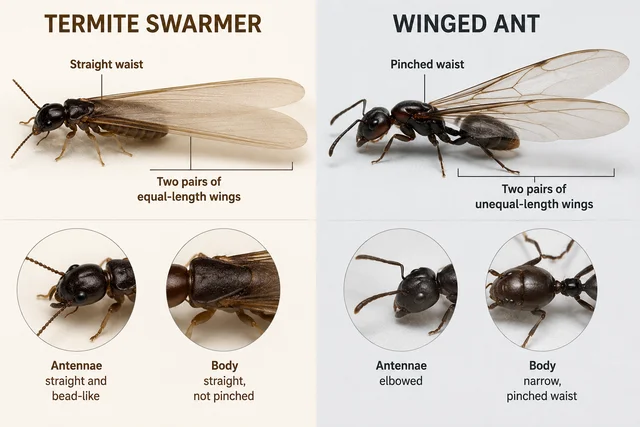
Termite swarmer vs. winged ant
Termite swarmers have a straight waist and two pairs of equal-length wings; winged ants have a pinched waist and unequal wings.
When is termite swarm season in the Hudson Valley?
In our region, subterranean termite swarming is primarily a spring event. Swarms generally occur during warm spring weather, often from roughly April through June — but exact timing varies from year to year.
Weather matters more than the calendar. Warm temperatures, adequate soil moisture and calm conditions can help trigger swarming, and swarms are frequently noticed in the day or two after spring rain when temperatures rise. An unusually warm spring can bring activity earlier, while an extended cool stretch can delay it.
Why do termites swarm?
A swarm is part of the colony's reproductive cycle. Most termites in a subterranean colony are workers and soldiers that never develop functional wings. As a colony matures, it can begin producing reproductives.
These winged termites leave together, fly a relatively short distance, shed their wings and attempt to pair up and establish new colonies. Swarmers themselves are not the termites doing most of the structural feeding. Their importance to a homeowner is what their presence indicates: an established colony exists somewhere nearby.
Why you may suddenly see hundreds at once
The word "swarm" is appropriate because the event can appear very suddenly. A homeowner may see no obvious termite activity at all, then unexpectedly discover numerous winged insects in one spot.
- Windows and window sills
- Sliding glass doors and doorways
- Basement windows and light wells
- Bright interior lights
- Foundation areas
- Porches and decks
And why they can vanish just as fast
Swarmers are weak fliers and are drawn toward light, which is why windows and doors are such common discovery points. The swarm itself may also be brief — by the time a homeowner investigates, the insects may be gone while their discarded wings remain behind.
Termite swarmer vs. flying ant
This is the single most useful identification skill during swarm season. Three features separate them: waist, wings and antennae.
Termite swarmer vs. winged ant
Termite swarmers have a straight waist and two pairs of equal-length wings; winged ants have a pinched waist and unequal wings.
Termite swarmer — body
Relatively straight-sided body with no strongly pinched waist.
Flying ant — body
Noticeably constricted, pinched waist between thorax and abdomen.
Termite swarmer — wings
Two pairs of wings roughly equal in length, often extending well beyond the body, and shed easily after the flight.
Flying ant — wings
Front wings noticeably larger and longer than the rear pair.
Termite swarmer — antennae
Straight or gently curved, bead-like antennae.
Flying ant — antennae
Distinctly elbowed antennae.
Don't ignore discarded wings
You don't need to see live swarmers to find evidence of a swarm. After flying, termites shed their wings, and those wings can persist long after the insects are gone.
- Window sills and door thresholds
- Sliding doors and basement windows
- Foundation walls
- Spider webs near windows and light sources
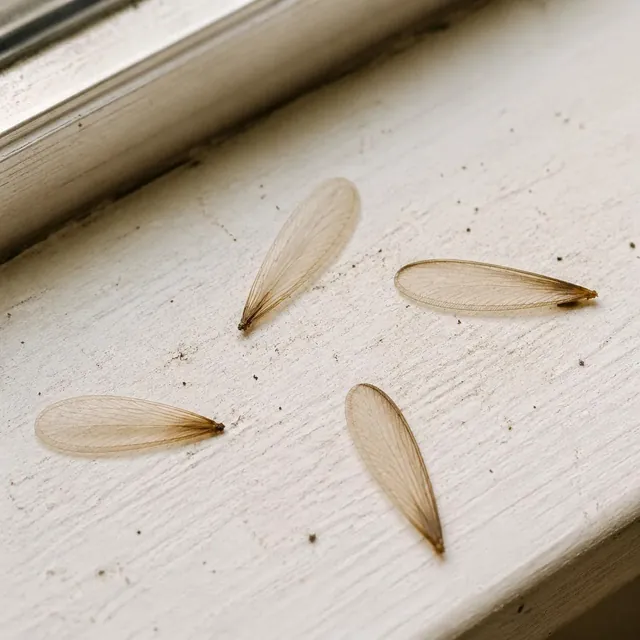
Discarded wings
After a swarm, termites shed their equal-sized wings, leaving them on windowsills, door frames and other light sources.
An outdoor swarm and an indoor swarm are different
Termites swarming outdoors
Seeing swarmers outdoors does not automatically mean your house has an active infestation. Termites occur naturally throughout the environment. It does indicate that a mature colony exists somewhere in the surrounding area, and because subterranean termites live in soil and forage away from the colony, nearby activity is worth being aware of.
Termites swarming inside the house
An indoor swarm deserves more attention. If large numbers of swarmers emerge from inside a home, basement, wall or window frame, it can mean termites have access to the structure or are emerging from a colony associated with the building. This should not be treated as a simple flying-insect problem — the underlying source should be investigated.
Other signs of subterranean termites
Swarmers are only one potential sign of termite activity. Knowing what else to look for can help you recognize conditions that deserve a closer look. Visit our Termite Pest Library page for additional identification photos and information.
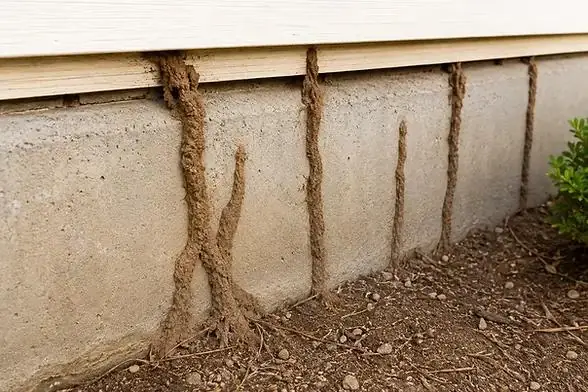
Mud Tubes
Narrow, pencil-width shelter tubes over foundations or masonry help protect subterranean termites as they travel between the soil and wood.
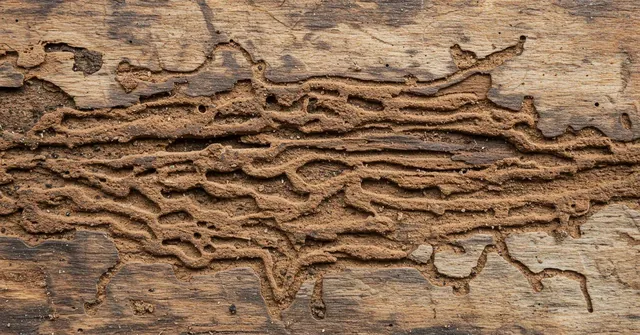
Damaged Wood
Termite feeding often occurs inside wood while the outer surface remains relatively intact, so significant damage isn't always obvious from the surface.
Discarded Wings
Accumulations of similar-sized translucent wings around windows, doors or other light sources can indicate that a termite swarm recently occurred.
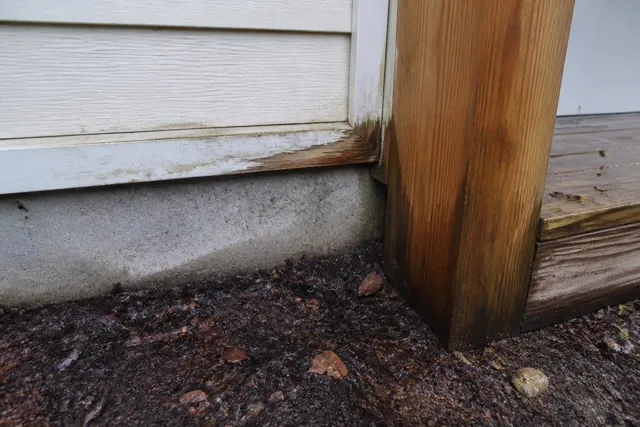
Moisture-Related Areas
Persistent moisture around wood, foundations and soil can create conditions that are more favorable for subterranean termite activity.
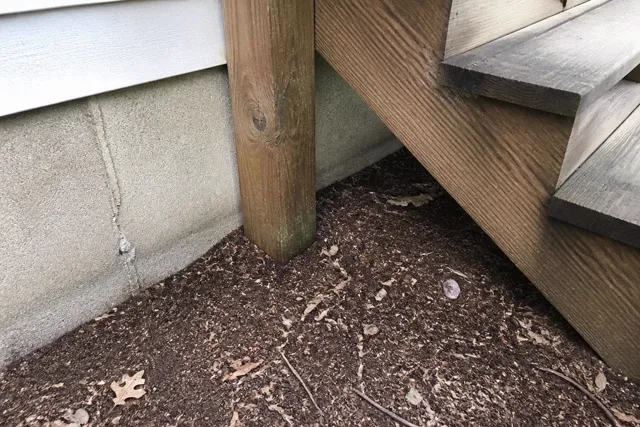
Wood-to-Soil Contact
Structural wood, trim, stairs, posts or other cellulose materials touching soil can provide termites with favorable access to a structure.
Why Hudson Valley homes can be vulnerable
Housing here ranges from historic homes with fieldstone foundations to postwar construction and newer subdivisions in Westchester, Putnam, Rockland, Dutchess and Orange Counties. Each brings its own conditions.
- Fieldstone and masonry foundations
- Older basement framing
- Porches, decks, additions and wood steps
- Landscaping timbers and wood stored near the structure
- Areas with persistent moisture
- Foundation penetrations and cracks
Older homes aren't the only ones
Older homes may have gone through multiple additions, repairs and renovations that make parts of the foundation and framing difficult to inspect. Newer homes are not automatically immune. The important issue is whether termites can move from soil to a source of cellulose and moisture.
What should you do if you see a termite swarm?
1. Don't panic
A swarm does not automatically mean extensive structural damage. It means the insects should be correctly identified and the source investigated.
2. Collect a few specimens
Save several insects or discarded wings in a small container or sealed bag — it makes identification far easier.
3. Take clear photographs
Get close shots showing the whole insect, the wings, the waist and the antennae. A blurry photo from several feet away rarely settles it.
4. Record exactly where you found them
Indoors or outdoors, at a basement window, near a foundation, from a wall opening, or by a porch — location is genuinely useful information.
5. Don't just spray what you can see
The visible swarmers are one part of the colony's reproductive cycle. Killing them does not address the colony that produced them.
6. Have the property evaluated when appropriate
An indoor swarm, repeated swarming, mud tubes or suspected damage warrants further investigation.
Can you prevent termite swarms?
Not really — you can't stop naturally occurring colonies in the surrounding environment. What homeowners can do is reduce the conditions that make a structure vulnerable.
- Correct persistent moisture problems and repair plumbing or exterior leaks
- Maintain drainage away from the foundation
- Avoid unnecessary wood-to-soil contact
- Keep firewood and lumber away from the structure
- Repair deteriorated exterior wood
- Keep foundation areas reasonably accessible for inspection
- Watch for mud tubes, discarded wings and unexplained wood damage
The biggest takeaway
Termite swarmers are messengers. The flying termites themselves are temporary; what matters is where they came from. A swarm outdoors means termites are active somewhere nearby. Swarmers emerging indoors, piles of discarded wings at interior windows, or signs such as mud tubes or damaged wood mean the structure should be evaluated. Correct identification is the first step.